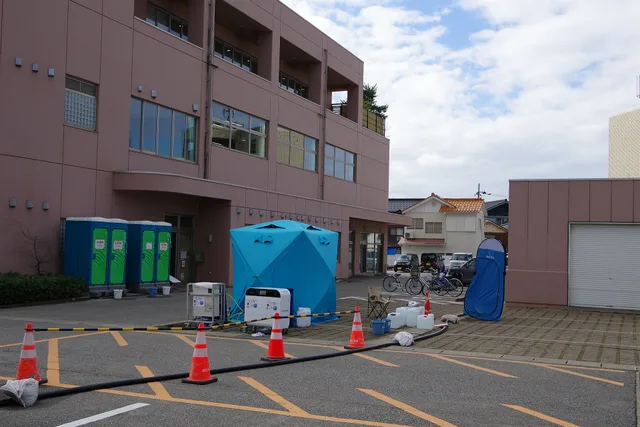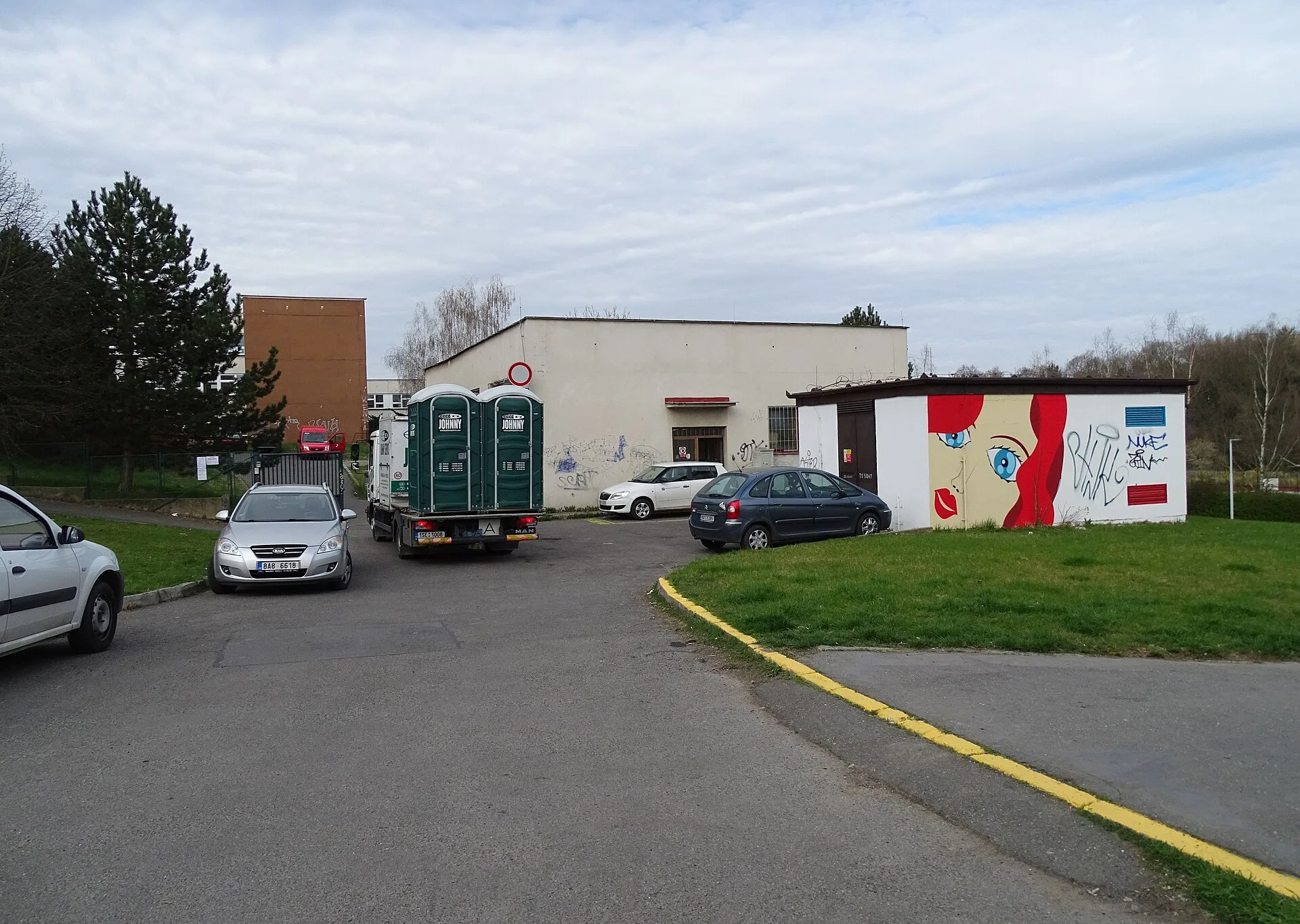
Guides
Disaster surge operations for portable restroom fleets
Searching disaster surge pricing portable restrooms? This guide covers staging, staffing, service records and recovery—not rate figures.
What to take away
- Surge work pays for readiness, not weekendsa standby fee, a per-truck mobilization fee, a service rate and a demobilization fee.
- Houston fleets stage inland before landfall, because waiting for a mandatory evacuation order puts you behind the traffic.
- Colorado and Utah wildfire work runs through state emergency management, federal incident teams and utilities, and registration takes months.
- Your contract is usually with a city, county, hospital or utility; FEMA reimburses that entity afterward.
- Payment follows the fileone signed ticket per service visit, one timestamped photo per unit per day.
How disaster surge demand differs from event demand
A festival books six months out with a fixed unit count. Disaster surge work arrives as a warning order and the count changes hourly.
That difference sets the price. You are paid for trucks that can roll within a day, for crews who will sleep in a staging yard, and for the risk that the storm turns north and the order dies.
Event clients compare price per unit. Surge clients compare time to first placement. A fleet that puts 200 units on the ground in 24 hours charges for that speed.
The paperwork is heavier too. Event work needs a signed contract. Surge work needs daily service tickets, disposal manifests, driver logs and damage photos, because a government agency audits every line.
Cash flow runs backward. Fuel, driver pay and extra hauling go out before the first invoice clears. Owners who treat surge as a cash event rather than a margin event run dry in week two.
Fleets that read the trade press know the directions for growth rarely sit inside one service line, and surge work is the clearest example.
Hurricane staging along the Houston Gulf Coast
Houston sits behind a shallow coast with one main evacuation corridor, so the staging decision is made inland, not on the beach.
Run two yards. The coastal yard holds units for industrial and construction clients who stay through the storm. The inland yard, near Beltway 8 or farther north, holds the surge fleet, fuel and spare parts.
Track the storm with public data, not rumor. NOAA weather forecasts and outlooks tell you how many units to hold back, and the agency's seasonal prediction for the Atlantic shapes how much Gulf capacity fleets keep in reserve.
Use this staging sequence for a Gulf Coast storm:
- 120hoursAt out, confirm fuel, water and two disposal sites before suppliers sell out.
- 96hoursAt out, move surge units inland to the yard near Beltway 8 or farther north.
- 24hoursBy out, stop road moves as wind and evacuation traffic close routes.
Gulf Coast Storm Staging Sequence
- 120 hoursConfirm fuel, water, hauling vendors
- 96 hoursMove surge units inland, photograph
- 72 hoursStaff yard, load trucks, freeze bookings
- 48 hoursPlace units at hospitals, shelters, utilities
- 24 hoursStop road moves, hold fleet
Houston demand is not only storm demand. The ship channel and the industrial corridor keep construction crews working year round, so a hurricane contract usually sits on top of an existing jobsite account. That base load pays the yard rent between storms, which is why the Gulf Coast carries more emergency restroom capacity than most metros.
Wildfire contracts across Colorado, Utah and the Mountain West
Wildfire sanitation is a different product. Crews work 12 to 16 hour shifts in remote terrain for weeks, and the unit has to be serviced with no paved road nearby.
Contracts in Colorado and Utah flow through the state emergency management office, a federal incident management team or a utility. Each keeps its own vendor list, and getting on that list takes months.
Mountain West work favors four-wheel-drive service trucks, high-clearance trailers and drivers who can read a fire map. A standard rear-load vacuum truck will not reach a spike camp at 9,000 feet.
Service intervals matter more than unit count. A 20-unit camp that cannot be pumped for five days becomes a problem the incident commander solves by replacing the vendor.
Smoke and road closures change the plan daily. Build the route the night before, confirm it with the incident contact each morning, and keep a second route for when the wind shifts.
Texas fleets can start with the Texas Division of Emergency Management (TDEM). In Colorado, state vendor records are kept through ColoradoVSS, the Vendor Self Service system of the Office of the State Controller. In Utah, state solicitations run through U3P, the Utah Public Procurement Place, and vendors register through the Utah Supplier Portal. Then ask the Colorado Division of Homeland Security and Emergency Management and the Utah Division of Emergency Management whether their emergency vendor lists sit outside those systems. Registration is free and slow, so do it in the off season. The fire that needs you will not wait for portal approval.
The Mountain West season overlaps the Gulf season. A fleet with trucks in both has to decide which contract gets the spare units, and that decision belongs in writing before the phone rings.
FEMA and state emergency management procurement terms
FEMA rarely buys portable restrooms from a small fleet directly. It reimburses state, local and tribal governments and certain private nonprofits for eligible emergency work, and those entities pay vendors under their own contracts.
That distinction decides your customer. Your contract is with a city, county, school district, hospital or utility, and FEMA money reaches them afterward. The terms that bind you are the ones in that contract.
FEMA’s Public Assistance Program can reimburse eligible emergency work by state, local and tribal governments and certain private nonprofits. Read the current program guidance, the Public Assistance Program and Policy Guide (PAPPG), before you sign a rate sheet, because your invoice has to survive the same audit.
Small businesses have a separate path. Public Assistance money goes to the public entity, not to your fleet; for your own losses the federal route is the Small Business Administration, whose low-interest disaster loans help businesses of all sizes recover from declared disasters, including rebuilding or replacing fleet assets after a storm.
State terms vary. Texas, Colorado and Utah each run their own vendor registration, insurance minimums and rate schedules. Some publish a pre-negotiated hourly rate for trucks and units. Others ask for a quote during the event.
Key terms to check in any emergency contract:
- Activation and demobilization rates, not just daily unit rates
- Payment terms, and whether the state pays before federal reimbursement arrives
- Insurance limits, including auto, general liability and workers compensation
- Documentation required per service visit
- Disposal rules for septage and greywaterthe EPA's 40 CFR Part 503 counts material removed from a portable toilet as domestic septage, and the receiving plant or the state environmental agency sets the disposal terms
- Termination rights if the event is called off
- Prevailing wage or local hire clauses
A pre-negotiated rate schedule is the best outcome. It takes the negotiation out of the worst possible moment and lets you staff against a known number.
The insurance cost in an emergency contract runs higher than in event work, because the work happens on closed roads, in active incident zones and at night. Confirm your carrier covers emergency response before you bid.
Staffing, hauling and subcontracting during a surge
The 72-hour mobilization plan is the core document. It names who drives, who services, who answers the phone and who signs the tickets, hour by hour, for three days.
Hour 0 to 24 is loading and first placement. Hour 24 to 48 fills the second wave and starts service routes. Hour 48 to 72 stabilizes service and rotates drivers before fatigue causes an accident.
Staffing plan for a 200-unit surge:
- Driversassign initial placement and return runs.
- Service techniciansassign service-route coverage and restocking.
- Fuel and waterdesignate who confirms supply and truck readiness.
- Dispatchname who handles callouts, route changes and incident contacts.
Staffing a 200-Unit Surge
- 2yard leads on 12-hour shifts
- 6drivers on 10-hour shifts, 2 relief
- 3service technicians with vacuum trucks
- 1dispatcher for government contact
Subcontracting is normal, but the rate has to be signed before the storm. A handshake rate doubles when the subcontractor gets a better offer, and you cannot service a contract you cannot staff.
Hauling is the bottleneck. Fuel, fresh water and disposal sites compete for the same trucks, so line up two disposal sites. The nearest one will be closed or full within a day.
Driver fatigue is a safety and liability issue. OSHA rules apply to your own workers, including the construction sanitation standard, 29 CFR 1926.51, on jobsite toilets, and the general duty clause, and a sleep-deprived driver on a closed highway is a claim waiting to happen.
Keep the return leg in view during mobilization. Units that go out fast still have to come back, be cleaned and be ready for the next call, so schedule the return leg before the last unit is placed.
Pricing structures that survive a 72-hour mobilization
Surge Pricing Components
Readiness
- What it pays for
- Trucks held back
- How to quote
- Daily hold rate
- If storm misses
- You keep it
Mobilization
- What it pays for
- Fuel, permits, driver
- How to quote
- Per truck
- If storm misses
- Lost
Daily service
- What it pays for
- Pumping, restocking
- How to quote
- Per round trip
- If storm misses
- Lost
Demobilization
- What it pays for
- Return and cleaning
- How to quote
- Per truckload
- If storm misses
- Lost
The readiness fee pays for trucks held out of event work. Without it, you are gambling your event calendar on a storm that may turn north.
The mobilization fee covers fuel, permits, driver time and first placement. Quote it per truck, not per unit, because the truck is the scarce resource.
The daily service rate covers pumping, restocking and inspection. For wildfire camps, price service by round trip, because a remote route can take four hours.
Worked example: a 200-unit hurricane placement, 10 days, 60 miles from the yard.
Pricing structures
- Readiness fee
- 200 units at a daily hold rate for 3 days.
- Mobilization
- 10 truckloads at a per-truck rate.
- Service
- 200 units serviced every other day for 10 days.
- Demobilization
- 10 truckloads plus cleaning and inspection.
Each rate in that example comes from your own numbers: cost per truck day, driver hours, disposal charges and consumables, or from the buyer's pre-negotiated schedule where one exists. If the storm misses, you keep the readiness fee and lose the rest. That is the trade, and it belongs in writing before a single unit moves.
Price the second wave higher than the first. The first wave is planned work. The second wave happens when your yard is empty and your drivers are tired, and the market rate for that work is whatever the buyer will pay.
Watch the margin on consumables. Paper, deodorizer and hand sanitizer get expensive when every supplier in the region is sold out, and a fixed consumables rate can turn a good contract into a loss.
That is also where portable restroom rental pricing matters more than the parts you replace, because a dead unit on a live contract invites a replacement vendor.
Insurance, documentation and cost recovery after the event
Cost Recovery File Per Contract
- Daily service tickets, signed
- Disposal manifests
- Driver logs
- Unit serial numbers
- Timestamped photos, one per unit per day
- Damage photos the day it happens
Build the file during the event, not after. One folder per contract, one photo per unit per day, one signed ticket per service visit. A missing ticket is a missing payment.
Damage is normal in surge work. Units get hit by equipment, tipped by wind or buried in mud. Photograph damage the day it happens and note it on the ticket, because a repair discovered a week later is harder to bill and harder to prove.
Insurance claims and government reimbursement run on different clocks. Your carrier wants notice quickly. The agency wants a complete file. Do both, and keep copies of everything you send.
SBA disaster loans are the backstop for fleet recovery when a storm damages your own yard, trucks or inventory. They are loans, not grants, and they take time, so they are a recovery tool rather than a surge tool.
After the event, review three numbers: revenue per truck day, service cost per unit and days to payment. Those three tell you whether the surge was worth the risk and what to change before next season.
For owners still weighing whether to add surge capability at all, the first-year money question is whether the fleet can carry the working capital through a slow payment cycle. If it cannot, partner with a larger fleet instead of bidding alone.
Common questions
Do I need a FEMA contract to do disaster restroom work?
No. Most fleets contract with a city, county, utility or incident management team, and that entity seeks FEMA reimbursement afterward. Your rate sheet has to survive the same audit the entity faces, so document every service visit from day one.
How early should I stage units for a Houston hurricane?
Move surge units inland at 96 hours out and stop road moves by 24 hours, when wind and evacuation traffic close the routes. Confirm fuel, water and two disposal sites at 120 hours, before suppliers sell out.
Can a small fleet win wildfire work in Colorado or Utah?
Yes, if it registers as an emergency vendor in the off season and can service remote camps with high-clearance trucks. Registration is free and slow, so the season to do it is the one without fires.
What is the biggest pricing mistake in surge work?
Quoting a flat daily rate with no readiness, mobilization or demobilization fee. That leaves the fleet carrying all the cancellation risk, and a storm that turns north pays nothing for the trucks you held back.