Guides
New or Used Portable Restroom Rental Units: How to Decide
How to decide between new and used portable restroom rental units: judge the failure mode, inspect used units and compare capital cost per service cycle.
What to take away
- For portable restroom rental equipment, decide on failure mode before you decide on price. Something that fails slowly and visibly is a reasonable used buy. Something that fails suddenly and takes the route down is not.
- Units usually pass that test. The vacuum truck usually does not, because a pump or tank problem stops every stop on the schedule.
- Plastic ages in sunlight. A used unit is judged on its shell, its door hardware and its tank, not on how it photographs.
- Budget refurbishment as part of the purchase, not as a surprise afterward. A cheap lot that needs a full parts pass was never cheap.
General guidance only. Manufacturer instructions and local vehicle and waste rules govern what you may buy and operate.
The question is failure mode, not price
Sort any candidate purchase by what happens the day it fails.
The classes you will compare are the standard non-flush unit, the ADA-compliant unit, the hand wash station, the restroom trailer with its own water supply and pump, and the vacuum truck that services the route. Each one fails in its own way, and how it fails is what you are buying.
Failure Mode by Equipment Type
Item
- Standard unit
- Slowly, visibly
- Accessible unit
- Slowly, compliance risk
- Restroom trailer
- Hidden plumbing failure
- Vacuum truck
- Suddenly, route stops
- Hose and fittings
- Progressively, then all at once
- Wash and repair equipment
- Gradually, with warning
How it fails
- Standard unit
- Yes, with inspection
- Accessible unit
- Yes, if sound
- Restroom trailer
- Specialist inspection only
- Vacuum truck
- Rarely, with evidence
- Hose and fittings
- Buy new
- Wash and repair equipment
- Yes
Sensible used buy?
- Standard unit
- Accessible unit
- Restroom trailer
- Vacuum truck
- Hose and fittings
- Wash and repair equipment
The pattern is consistent: buy used where the failure gives notice and can be repaired between routes. Buy new where the failure is sudden or where the consequence lands on a customer's site.
Inspecting a used unit
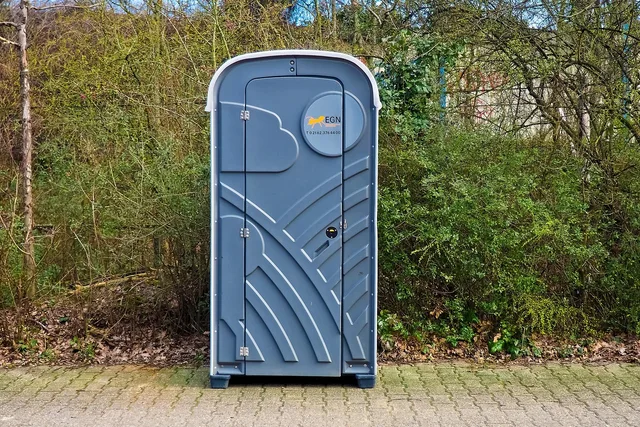
Look at the shell first, in daylight. Sun-aged plastic goes chalky and loses flexibility, and a panel that has gone brittle will crack at the first rough handling rather than in year three.
Then work through the parts that decide whether the unit is serviceable.
Use this checklist on each used portable restroom unit:
- Shell:In daylight, look for chalking, cracks, brittle or soft areas, and signs of patching.
- Base and tank:Check for leaks, bulges, damaged seams, and signs of previous repairs.
- Door and frame:Check alignment, latch operation, and whether the door closes properly.
- Hinges and springs:Look for looseness, corrosion, damage, and smooth operation.
- Seat and lid:Check that both are present, secure, and free of cracks.
- Vent and other fittings:Check that the vent and any fitted fixtures are present, secure, and undamaged.
- Interior and floor:Look for damage, residue, or odors that may indicate a cleaning or repair issue.
Used Unit Inspection Checklist
- Tankcracks, repairs, base distortion, leak staining
- Doorhinge wear, spring tension, latch alignment
- Riser and seatcracks, lid seating, shape changes
- Vent stackpresent, clear and capped
- Floor and skidsgouging, feet sitting flat
- Interiorembedded graffiti, residue that will not clean
- Hardwarepaper holder, sanitizer bracket, hasp
Many parts can be repaired, but tank damage may make a unit uneconomical or unsafe. Have suspected tank damage assessed, then price the repairs and add them to the purchase before you compare.
Restroom trailers add inspection points that units do not have. A trailer brings tires, brakes, lights, a fresh-water tank, a pump and its plumbing, so it is checked partly as a vehicle and partly as a water system. A unit fails between stops; a trailer can fail on the road, which is why its running gear and plumbing deserve the same attention as its shell.
Comparing capital cost per service cycle
Once the units pass inspection, the comparison is arithmetic rather than judgment. A used unit looks cheaper on the invoice; whether it is cheaper to own depends on what you pay for it and how many service cycles you get out of it.
Capital Cost Per Service Cycle
- PPurchase price of one unit
- RRefurbishment to your standard
- SSalvage or resale at retirement
- CService cycles before retirement
Let P be the purchase price of one unit, R the refurbishment needed to bring it to your standard, and S the salvage or resale value you expect at retirement. Let C be the number of service cycles you expect from it before it is retired.
Then the capital cost per service cycle is (P + R - S) divided by C.
C, not P, usually decides the answer. A used unit at a fraction of the price, with half the remaining cycles and a parts pass ahead, is not a better buy. It is the same buy with more work in it.
Run the same expression for both options. Compare the results, not the price tags.
Where used stock is genuinely the better purchase
Three cases repeat. Buy from an operator upgrading, not closing: the fleet was maintained and the sale is not distress.
When Used Stock Is the Better Buy
Is the seller an operator upgrading, not closing?
Fleet was maintained, sale is not distress
Distress sale, expect deferred maintenance
Buy a class you are testing, where you want evidence before committing. Buy seasonal depth that sits idle part of the year, where tying up less capital is the point.
Two cases repeatedly disappoint. An auction lot with no history, and units bought from a market where the climate was harsher than yours. Both arrive needing more than they promised.
Whichever way you go, log the purchase properly. IRS Publication 583, Starting a Business and Keeping Records, explains business recordkeeping. Keep records that support the unit’s purchase and improvements through the period needed to substantiate its tax treatment, including its eventual disposal.
Before committing, confirm that your truck, service routes, and applicable licensing requirements can support the number and type of units you plan to buy.
The truck, where the rule changes
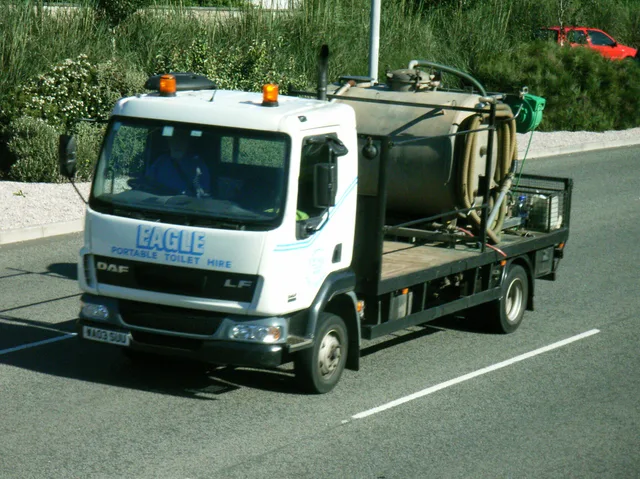
A used vacuum truck can be a good buy and can also be the mistake that defines a year. What separates them is evidence: pump service history, tank inspection, valve and hose condition, and a chassis maintained by somebody who wrote it down.
Have it inspected by someone who works on that equipment rather than a general mechanic. Confirm registration and applicable vehicle requirements with your state motor-vehicle agency and, where federal motor-carrier rules apply, the Federal Motor Carrier Safety Administration (FMCSA). For waste handling and disposal, check with your state environmental agency and local wastewater authority; requirements vary by location and waste.
Refurbishing safely
Refurbishment means handling units that have been in service, sometimes with residue still present. Before work begins, assess the residue and cleaning products and select protective equipment for the hazards, including suitable gloves and eye protection. Wash and rinse the unit before bench work, then clean and disinfect it according to the product label and manufacturer instructions; do not improvise chemical mixtures.
OSHA's personal protective equipment rule, 29 CFR 1910.132, requires employers to assess workplace hazards and select appropriate PPE. OSHA's general-industry sanitation standard, 29 CFR 1910.141, and construction sanitation standard, 29 CFR 1926.51, set requirements for covered workplaces. Check which standard applies to the customer’s worksite; these standards do not replace applicable local waste-handling rules.
Once the units are in service, track each unit’s condition, repairs, and service cycles. Those records help update its expected remaining life and the cost-per-cycle comparison.
Common questions
How old is too old for a unit?
Age matters less than exposure. A unit that spent its life in shade under moderate weather can outlast a younger one that stood in strong sun. Judge the plastic, not the date.
Is it worth buying units without the matching parts supply?
Only if you have confirmed that door springs, hinges and seat lids for that model are still available. A fleet you cannot get parts for is a fleet with a retirement date you did not choose.
Should new and used units be mixed in one fleet?
Yes, provided they are the same model or share hardware. What causes trouble is a mixed fleet with three different door mechanisms, because the spare parts shelf triples and the driver carries the wrong part.
Does used stock affect what customers think?
Customers judge condition, not age. A clean, undamaged unit with working hardware reads as new. A chalky shell with a scratched interior reads as neglect whenever it was bought.