Guides
What inspectors look for in a portable restroom fleet in Seattle and the Pacific Northwest
A guide to portable restroom fleet inspections in Seattle and the Pacific Northwest, covering county health permits, septage hauling, washout rules and records.
What to take away
- No single license covers a fleet here. County health permits the units, the state environmental agency covers septage hauling, and the city or county stormwater program covers the yard.
- King County Public Health permits Seattle units. Snohomish, Pierce, Kitsap and Thurston run their own programs, so a regional fleet can hold four or five unit permits at once.
- Washout water is the most common violation. It needs a sanitary sewer connection, a contained holding tank or stormwater permit coverage. Gravel is not a disposal method.
- Inspectors ask for the same file every timehauling manifests matched to disposal receipts, washout logs, driver training and vehicle maintenance records.
- Most violations close without a penalty if you fix the problem, document it and respond before the written deadline. Repeat findings escalate.
Which agencies permit a fleet here
Permit stack for a fleet
- County health permits the portable units
- State environmental agency regulates septage hauling
- City or county stormwater program regulates the yard
- State transportation department registers the trucks
King County Public Health covers Seattle and most of the metro. Snohomish, Pierce, Kitsap and Thurston counties each run separate portable toilet programs with their own forms and fees. A fleet working the whole region can carry five unit permits before it hauls a single load.
Hauling is a second stack. Pump trucks moving septage fall under state waste rules, and the receiving facility, usually a wastewater treatment plant, keeps its own manifest trail. If you have wondered which permission actually authorizes a pump truck, it is a state waste hauler registration plus a local discharge approval.
Oregon splits the same work differently. The Oregon Department of Environmental Quality handles septage and waste discharge. County environmental health offices handle unit placement and event permits, and Multnomah, Washington and Clackamas counties each publish their own applications.
City rules sit on top of both. Seattle requires stormwater management for commercial yards and inspects them. Event work in Seattle and Portland runs through special event permits, and fire code governs where units may stand. Six authorities govern most rental operations: health, environment, transportation, labor, fire and local business licensing.
For a new operation, what inspectors expect at the first visit is proof the county permit exists, the unit count matches it, and the disposal paper trail is complete.
Washington permitting steps
- Apply to the county health department for a portable toilet permit and list every unit you own.
- Register as a waste hauler with the state if you pump and transport septage.
- Get written approval from the receiving treatment plant or disposal facility.
- File a stormwater plan with the city or county for your service yard.
- Keep vehicle registrations and any oversize or weight permits current with the state transportation department.
Oregon permitting steps
- Confirm whether your county environmental health office or the state runs the unit permit for your area.
- Register with the Oregon Department of Environmental Quality for septage hauling and disposal.
- Obtain a discharge or receiving approval for any washout water leaving the yard.
- Check county event permit rules before placing units at fairs and races.
Stormwater and washout at the service yard
Washout is where Pacific Northwest fleets get cited. Rinsing a tank or a row of units onto gravel sends concentrated waste toward a storm drain, and storm drains here empty into Puget Sound, the Duwamish or a salmon stream.
The federal frame is the National Pollutant Discharge Elimination System (NPDES) | US EPA, which controls point source discharges including many washout flows. Washington and Oregon run their own NPDES programs under EPA approval and write stormwater permits for commercial sites.
Seattle yard washout compliance
Where does washout water go?
sanitary sewer connection for washout water
Yes -> contained holding tank that gets pumped
Rain raises the stakes. Water crosses a washout pad and carries residue off site, so inspectors read grading, berms, covered storage and where runoff goes during a storm, not on a dry day. Portland yards near the Willamette draw extra scrutiny because of combined sewer overflow work.
A leaking pump truck on a Seattle street or a rural highway triggers a cleanup obligation. The Compliance | US EPA resources describe how pump truck waste handling is expected to work under federal rules. Keep absorbent, a spill kit and a written procedure on every truck.
Illegal dumping carries real exposure. The Enforcement | US EPA pages set out how federal penalties apply to illegal disposal, and states add fines on top. One dumped load can cost more than a year of compliant disposal fees.
- Washout pad graded to contain liquid
- Holding tank pumped on a set schedule
- Storm drain inlets protected or diverted
- Spill kit on every pump truck
- Written spill procedure posted at the yard
- Disposal receipts filed by date
What state and county health inspectors check
The Washington State Department of Health sets the framework county health departments enforce. Inspectors look at unit condition, sanitizer levels, ventilation, door latches and the structural integrity of the tank and riser.
A Washington inspection covers the physical unit and the paperwork together. Expect a count of permitted units against units actually in the yard and on site.
Oregon's public health authority and county environmental health offices run a similar program, leaning harder on event permitting. A fleet working fairs, races and festivals sees inspectors on site as well as at the yard.
Both states care about service frequency. A unit at a construction site with high worker counts needs more visits than a single unit at a park, and inspectors compare your schedule against site conditions.
Driver training records come up in both states. If a driver cannot explain how to sanitize a unit or where the waste goes, that lands in the report.
Records an inspector asks to see
Paperwork is where unprepared fleets fail. The request is predictable, and a fleet keeping one binder or shared drive current answers it in an afternoon.
Records an inspector asks to see
- County portable toilet permit
- Waste hauler registration
- Disposal manifests and receipts
- Washout and stormwater logs
- Vehicle maintenance files
- Driver training records
- Service tickets by site
| Record | Who asks for it | What it proves |
|---|---|---|
| County portable toilet permit | Health department | Units are authorized to operate |
| Waste hauler registration | State environmental agency | You may legally transport septage |
| Disposal manifests and receipts | Health and environmental agencies | Waste reached a permitted facility |
| Washout and stormwater logs | City or county stormwater program | Discharge is controlled |
| Vehicle maintenance files | Transportation and labor agencies | Trucks are roadworthy and safe |
| Driver training records | Health and labor agencies | Staff know handling procedures |
| Service tickets by site | Health department | Units are serviced often enough |
Match manifests to receipts. An inspector who finds a manifest with no receiving facility receipt treats the load as unaccounted for, and that becomes a finding.
Service tickets should show date, time, unit number, site address, what was done and who did it. A ticket reading only "serviced" invites a follow-up question.
Maintenance records follow the same principle. A pump truck runs an engine regime and a vacuum system regime, and two different regimes need separate logs. A preventive maintenance checklist that tracks both keeps the audit file complete.
Insurance certificates, driver licenses and vehicle registrations round out the file. Inspectors rarely ask for all of it at once, but the request can arrive with short notice.
Vehicle, tank and hose inspection points
Inspectors walk the yard, and what they see on the trucks often decides how deep the records review goes.
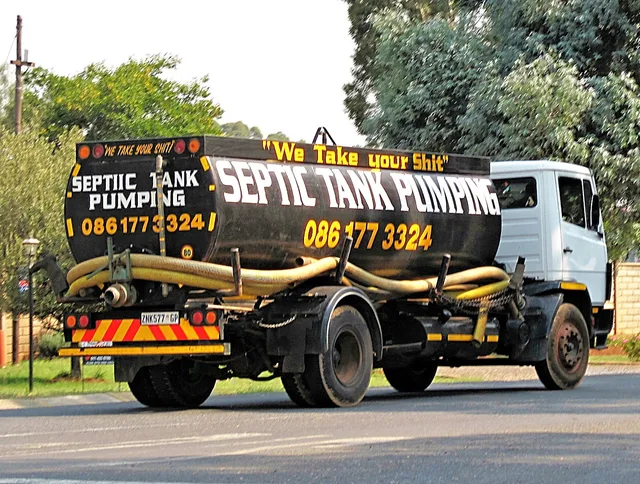
Start with the tank. Look for cracks at the weld seams, a failing vacuum pump, a leaking discharge valve and a gauge that reads true. A tank that drips on the pad is an immediate finding.
Hoses get checked for cuts, soft spots and proper couplings. A hose stored on the ground with an open end is a spill risk, and it tells an inspector the crew is careless.
Brakes, tires, lights, mirrors and the placard or signage required for waste hauling all come under review. Cab cleanliness is not cosmetic: food, open drink containers and unsecured tools in a truck that hauls waste draw comments about cross contamination and worker safety.
Stage units waiting for service so any leak is contained, and separate clean units from dirty ones to prevent recontamination.
Corrective action after a violation
Most violations in this region close without a penalty if the fleet responds quickly. The process is usually written: a notice describing the violation, a required fix and a deadline.
Responding to a violation
- Read the notice and identify the cited rule
- Fix the immediate problem, stop the discharge
- Document the fix with photos and receipts
- Submit the response before the deadline
- Correct the underlying process to prevent repeat
Repeat findings escalate. A second washout violation at the same yard can move from a warning to a fine, and in Oregon and Washington the environmental agencies can require a formal compliance plan.
EPA sector guidance is worth reading before that happens. The Regulatory Information By Business Sector | US EPA pages group waste haulers with the rules that apply to them, which helps a fleet build its own audit checklist.
Keep every corrective action file permanently. Permit renewals often ask whether prior violations were resolved, and a clean file answers in one page.
Common questions
Do I need one permit or several to run a fleet in Seattle?
Several. County health permits cover the units, state registration covers hauling, and the city or county stormwater program covers the yard. Each has its own renewal date, so track them separately.
Can I wash out units on gravel at my yard?
Generally no. Washout water needs containment, a sanitary sewer connection or coverage under a stormwater permit. Untreated runoff reaching a storm drain is a violation, and Seattle yards get inspected on that point.
How long do I keep disposal receipts?
Keep them for the life of the permit and longer. Inspectors commonly ask for several years of manifests during a renewal review, and a manifest without its matching receipt is treated as an unaccounted load.
Does an Oregon permit cover work in Washington?
No. Permits are issued by state and county, so a fleet working both sides of the border needs approvals in each. Confirm the current requirement with the county health department and the state environmental agency before you cross.